
About us
We are not a resort
We are a farm with a shoreline, a family with generations of Bakka behind us, and hosts who would rather keep things small than make them bigger.
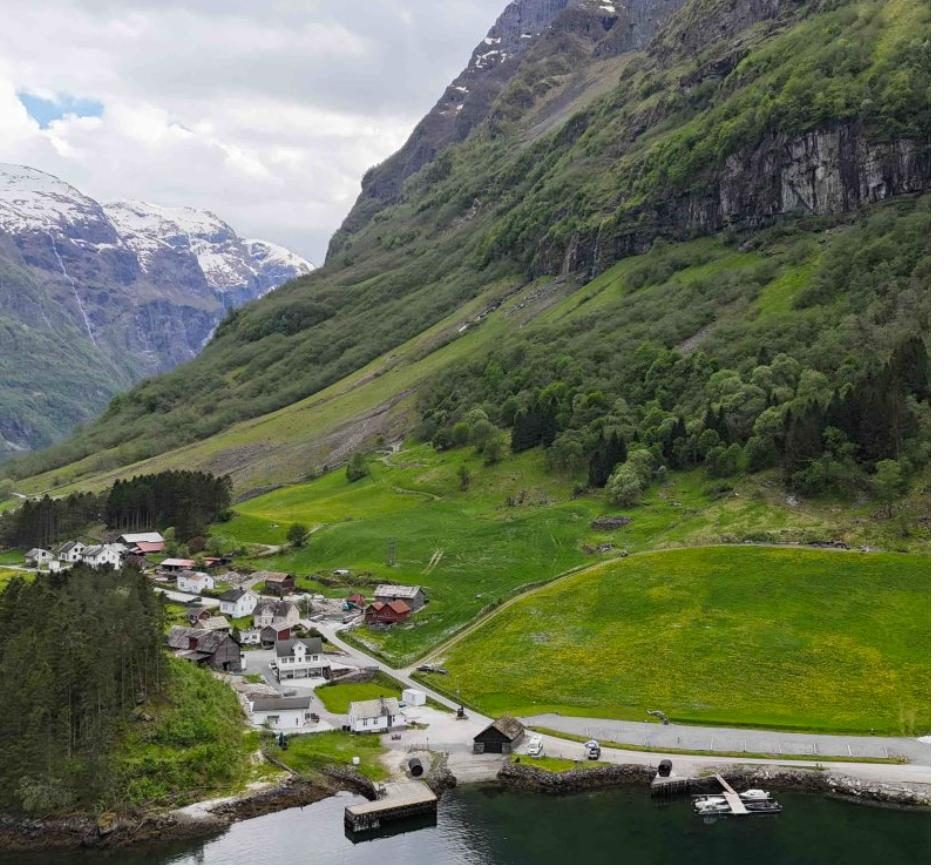
Dyrdal Gard
One of the four farms of Bakka
Dyrdal Gard is one of the four original farms of Bakka, worked by the same family for generations. There has long been a little letting here, and campervans finding their way in — but in 2016, camping at Bakka became a professional operation for the first time: a few pitches first, then a sanitary house, a sauna on the pier, boats by the old stone boathouse.
Then National Geographic listed this shore among Europe's finest places to camp, and Lonely Planet sent visitors. The name grew into Nærøyfjorden Camping, but nothing else changed hands: same farm, same family, same view.
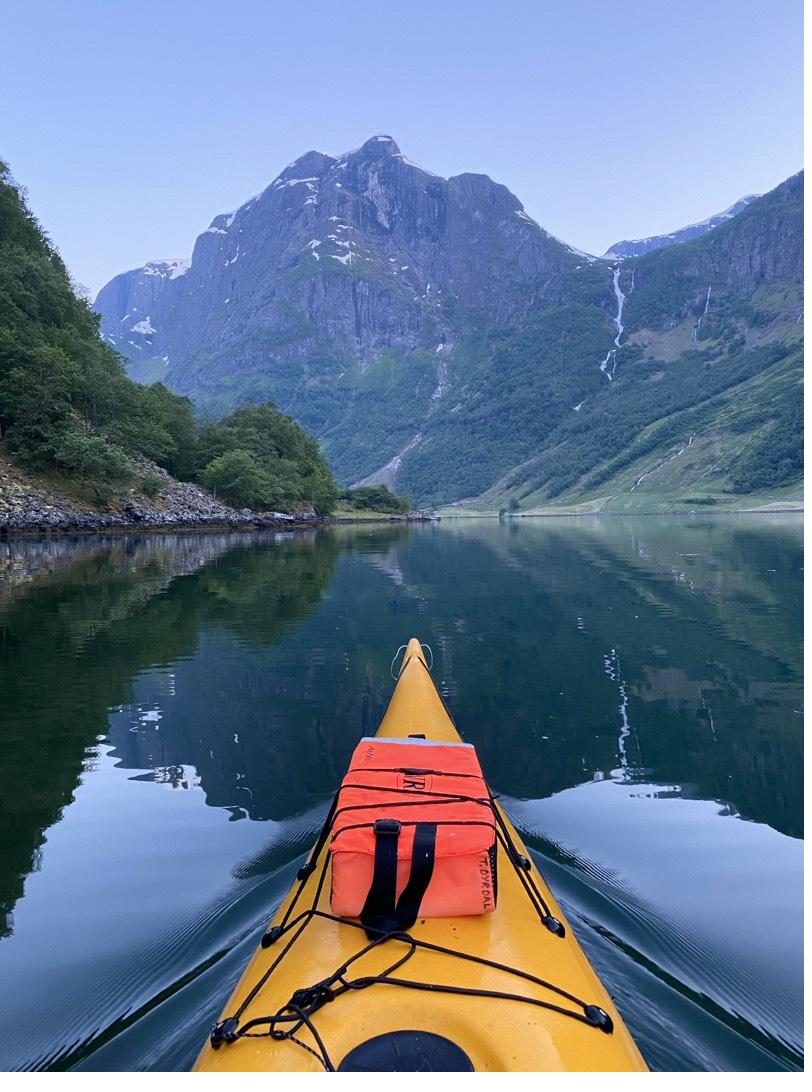
Your hosts
Olav Magne & Katrine
Olav Magne grew up with this fjord and knows its weather, trails and tides by heart; he spent his working life offshore, the last years as platform manager. Katrine taught school. Both are retired now — which at Dyrdal Gard means winters spent maintaining and upgrading the farm and the campsite, and summers spent on guests. The children and six grandchildren come and go like the goats.
When you stay with us, you are not a booking number. Ask about routes, tides, or where the light lands at nine in the evening; that is the part of the job we like best.
How we run the place
Three decisions we keep making
01
Keep it small
A limited number of pitches, and each season fewer of them for drop-ins. Small is what keeps the shore quiet — for you and for the nine people who live here.
02
Keep it quiet
Quiet hours from 23:00, no events, no music on the shore. The fjord provides the soundtrack, and it is better than ours.
03
Keep it honest
Live prices on the booking sites, house rules explained before you come, and no promises the weather can't keep. If something isn't great — like the afternoon shade — we tell you, and we tell you when the sauna fixes it.
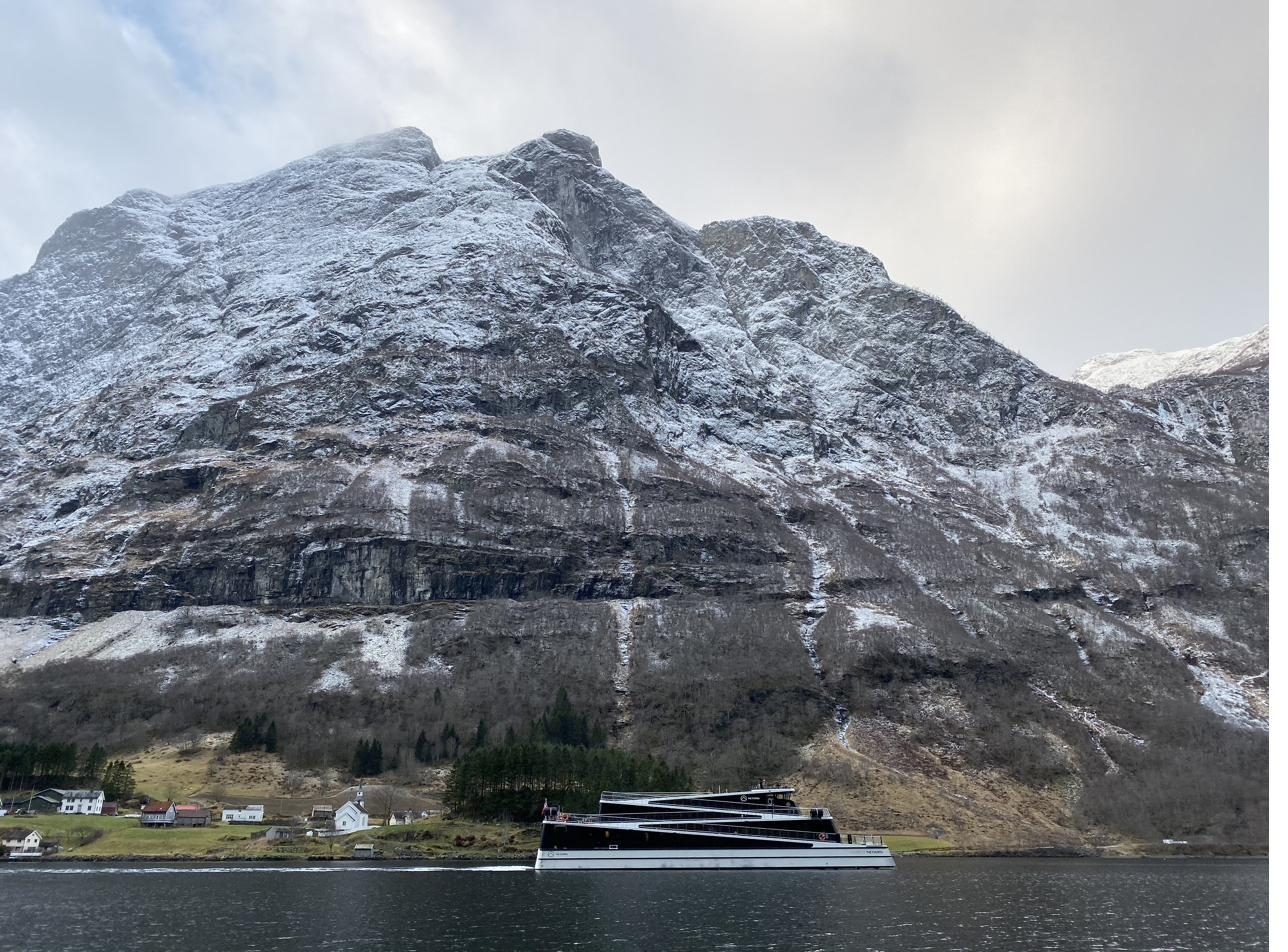
The fjord
Protected for a reason
The Nærøyfjord has been a UNESCO World Heritage site since 2005 — one of the two fjords chosen to represent all of Norway's west coast. At its narrowest it is 250 metres wide, under cliffs of up to 1,400 metres; the landscape is protected, and life here follows its rules.
Since 1 January 2026, zero-emission rules apply to passenger ships under 10,000 gross tons in the World Heritage fjords — the largest cruise ships have until 2032, and a few older vessels hold temporary exemptions until shore power is in place. Protection reaches onto land, too: the people who live here need permits for nearly everything — building, felling, changing — and the forests along the fjord are themselves protected. More and more of the boats glide past electrically, and the fjord is quieter than it has been since the steamship era. We sort waste strictly and ask our guests to help — it is a shoreline worth the small effort.
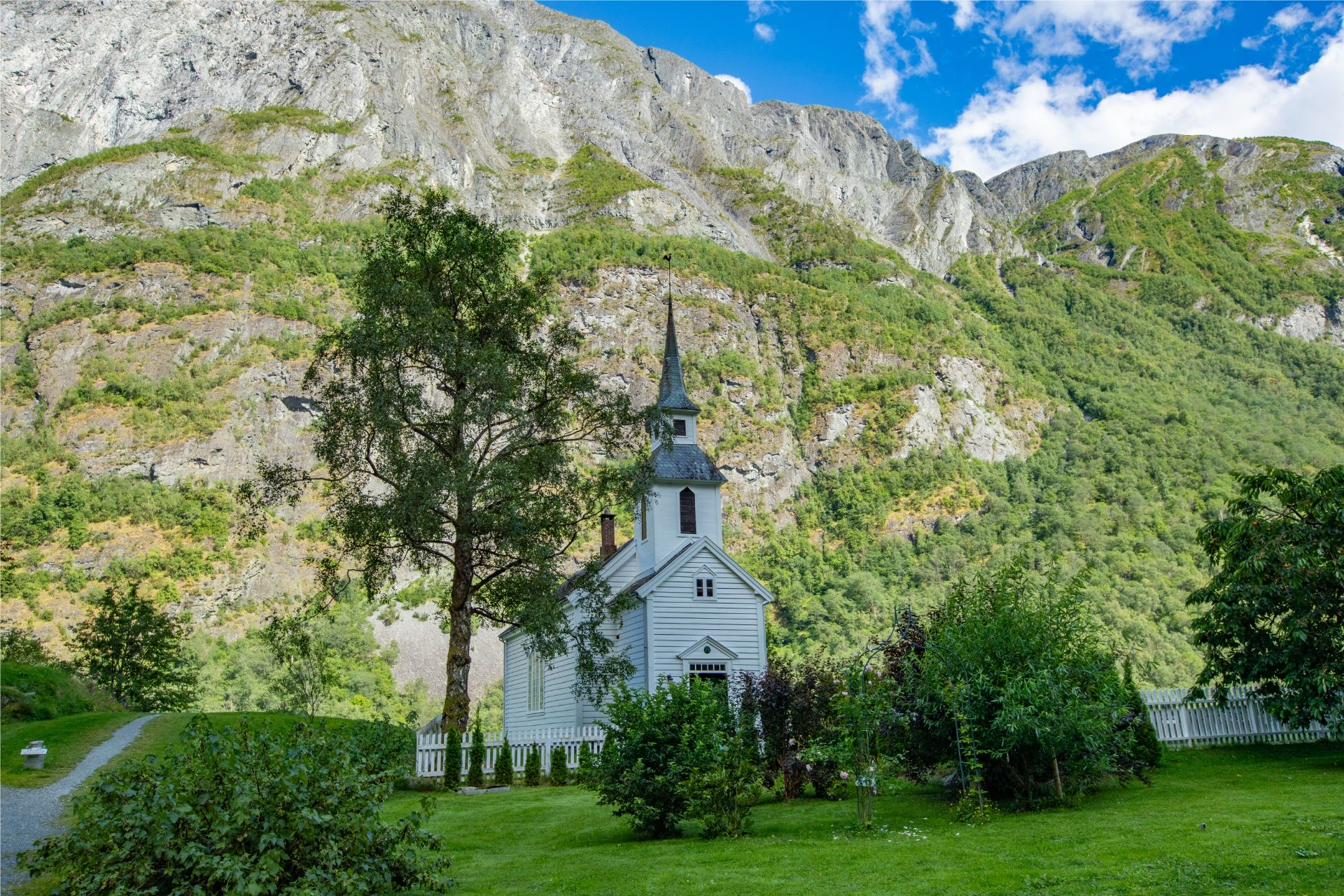
The other season
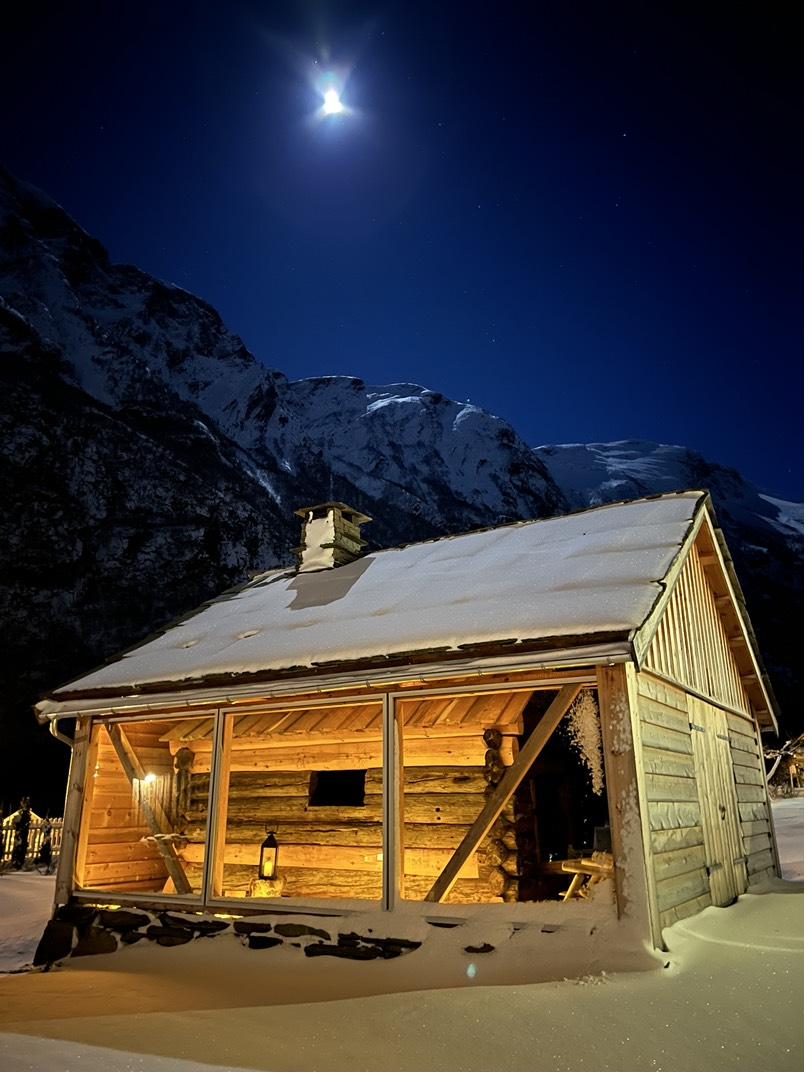
Winter in Bakka
From November the village folds inward: snow on the cliffs, the ferry's wake the only lines on the water. The campsite rests, but the cabin and the sauna stay open — winter here is the concentrated version of what people come for in July.